

Quick answer
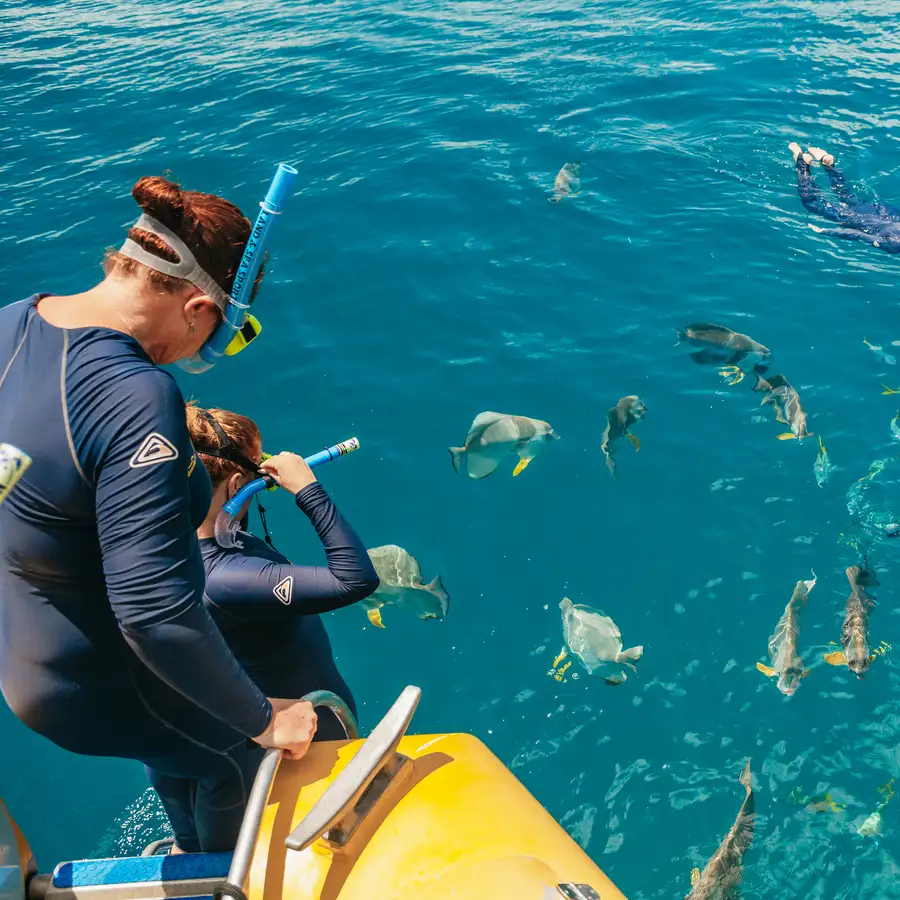
Yes, you can snorkel at Airlie Beach, but access depends entirely on boat tours—the mainland beach has no reef. Tour operators depart daily between 8:00 and 16:00, reaching sites like Blue Pearl Bay, Mantaray Bay, and Luncheon Bay within 60 to 90 minutes. Shore snorkeling from Airlie Beach's lagoon or foreshore yields sand and murky estuarine water, not coral. Entry to public beaches is free, but reef snorkeling requires booking a paid tour.
The Whitsunday Islands sit 15 kilometres offshore, their fringing reefs protected within the Great Barrier Reef Marine Park. Airlie Beach functions as the departure hub, its marina lined with catamarans and day-trip vessels. The town's own waterfront—a shallow lagoon and tidal mudflats—holds no coral. Snorkeling here means boarding a boat. Day tours motor east through Whitsunday Passage, targeting bays where coral gardens grow in 3 to 8 metres of visibility-dependent water. Blue Pearl Bay on Hayman Island's western flank attracts the most traffic: hard coral bommies rise from sand channels, sheltering parrotfish, wrasse, and occasional reef sharks. Mantaray Bay on Hook Island offers similar structure with fewer vessels. Luncheon Bay, tucked into the island's southern cove, produces calmer surface conditions when southeast trades blow. Tour itineraries rotate based on wind direction and tidal exposure—operators choose the site, not passengers. Water clarity fluctuates with tide and runoff. Spring tides churn sediment; neap tides settle it. Summer monsoonal rain clouds inshore reefs for weeks. Autumn and winter—April through September—deliver the clearest water, often exceeding 15 metres of horizontal visibility. Surface temperature holds between 23°C in August and 29°C in February, warm enough to snorkel without thermal protection year-round. Most operators supply vests, masks, and fins; underwater cameras cost extra. Airlie Beach snorkeling operates on a tour-dependent model. No reef lies within swimming distance of shore. The town offers accommodation, provisioning, and embarkation logistics, but the snorkeling itself happens offshore. Tour schedules run daily with morning and afternoon departures timed to tidal windows and reef access. Booking ahead secures a spot; walk-up availability narrows during school holidays and winter peak season. The mainland beach remains a departure point, not a snorkel destination.
“The town's own waterfront holds no coral—snorkeling here means boarding a boat.”
When Is the Best Time and Season to Can You Snorkel at Airlie Beach?
The best time for snorkeling near Airlie Beach is between September and November when water temperatures are comfortable and visibility is at its peak. Daily arrivals should aim for the 08:00–16:00 window to align with boat departures and optimal tidal conditions.
September–November
ModerateDry, 24°C–29°C. Low rainfall provides clear water.
This period offers the most consistent conditions for underwater visibility.
December–February
HighWet, 25°C–31°C. High humidity and summer storms.
Expect warmer water but potential fluctuations in visibility due to weather.
March–August
ModerateMild, 19°C–26°C. Cooling breeze and lower humidity.
Cooler air temperatures may affect comfort during transitions between water and boat.
08:00–16:00
Variable—
This window is required for boat tour departures to reach the reef during favorable tides.
Verdict: The optimal time is between September and November, targeting the 08:00–16:00 arrival window for daily boat tour departures.
Understanding Costs: Can You Snorkel at Airlie Beach for Free?
Access to public beaches in Airlie Beach is provided without charge, though snorkeling at the reef requires booking a separate commercial boat tour. Fees for these excursions are set by private operators rather than public entrance authorities.
While beach entry is 0 AUD, visitors must pay for commercial boat tours to reach snorkeling locations, with costs varying based on the selected tour provider.
Operating Hours for Planning: Can You Snorkel at Airlie Beach?
The Airlie Beach area remains accessible daily to facilitate departures for reef excursions and water activities. These hours reflect general operational availability for visitor coordination.
| Monday | 00:00–23:59 | |
|---|---|---|
| Tuesday | 00:00–23:59 | |
| Wednesday | 00:00–23:59 | |
| Thursday | 00:00–23:59 | |
| Friday | 00:00–23:59 | |
| Saturday | 00:00–23:59 | |
| Sunday | 00:00–23:59 |
Preparation Checklist for When You Can Snorkel at Airlie Beach
Snorkelling the Whitsundays from Airlie Beach requires advance booking and the right gear for tropical open water.
-
Book a tour at least 48 hours ahead — Operators fill quickly during peak season and require minimum passenger numbers.
-
Pack reef-safe SPF 50+ sunscreen — Marine park regulations prohibit chemical sunscreens that damage coral.
-
Bring or hire a stinger suit — Box jellyfish and irukandji are present October through May in these waters.
-
Carry a microfibre towel and waterproof bag — Boat decks have limited storage and no drying facilities between snorkel sites.
-
Confirm your departure wharf the night before — Different operators use different Airlie Beach marina berths.
-
Take motion sickness tablets 30 minutes early — Coral Sea crossings to outer reefs can be choppy in afternoon winds.
Check availability
Frequently Asked Questions: Snorkeling at Airlie Beach
Everything you need to know about can you snorkel at airlie beach