

Quick answer
Airlie Beach to Great Barrier Reef distance measures between 40 and 90 kilometres depending on the reef location you visit. Inner fringing reefs near the Whitsunday Islands lie 40–50 km offshore, reachable in 90 minutes by fast catamaran. Outer Reef sites like Hardy Reef and Bait Reef sit 70–90 km from Airlie Beach, requiring 2–2.5 hours transit each way. All sites fall within the Great Barrier Reef Marine Park, with the 8.50 AUD Environmental Management Charge included in tour operator pricing.
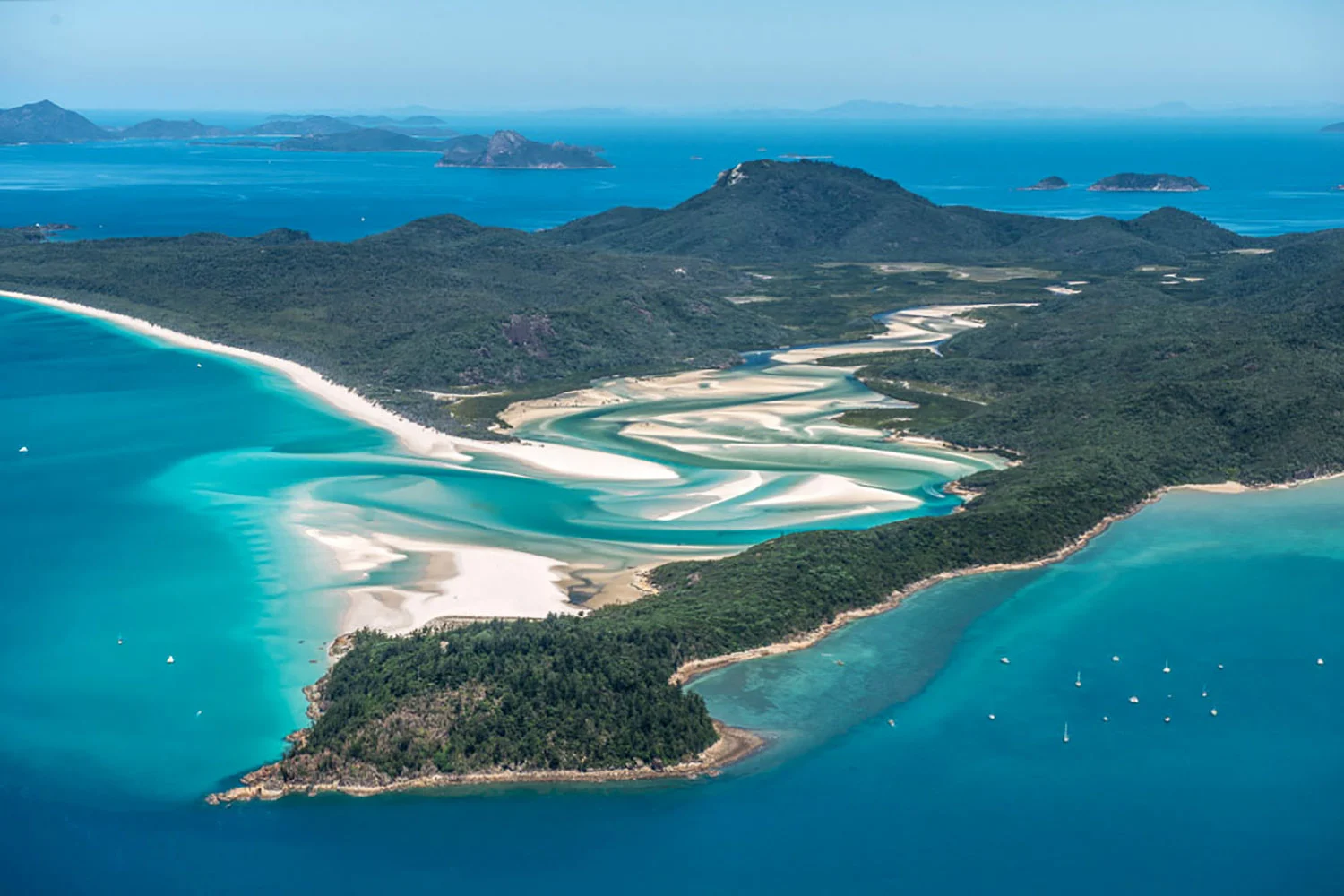
The Great Barrier Reef Marine Park encompasses 344,400 square kilometres, but the reef structure closest to Airlie Beach belongs to the Whitsunday sector—a zone of patch reefs, fringing reefs, and outer ribbon reefs distributed across 90 kilometres of ocean. The airlie beach to great barrier reef distance is not a single figure but a spectrum determined by reef morphology and vessel range. Inner reefs fringe the Whitsunday Islands themselves. Hook Island, Hayman Island, and Border Island host shallow coral gardens 40–55 km from the mainland, accessible within 90 minutes by day-trip catamaran. These sites offer sheltered snorkelling but lower coral density than outer locations. Mid-shelf reefs like Knuckle Reef and Black Reef lie 60–70 km offshore, where water clarity improves and pelagic species appear. Outer Reef platforms—Hardy Reef's pontoon site, Bait Reef, and Hook Reef—sit 75–90 km from Airlie Beach at the continental shelf edge, where the Coral Sea drops to 400 metres. Transit exceeds two hours, but these sites deliver the biodiversity and visibility the reef is known for. Nautical distance determines more than travel time. Longer routes limit daily scheduling: outer reef operators depart Airlie Beach between 07:00–08:00 to secure four hours on-site before the return leg. Sea conditions amplify with distance—swells manageable near the islands intensify in open water, particularly during southeast trade wind season. Reef zonation also shifts. Hardy Reef's permanent pontoon infrastructure would be economically impossible at a closer site; the distance reflects the reef quality that justifies the platform. The how far question is inseparable from which reef, and which reef determines what you see. Day-trip itineraries list specific reef names; match them to nautical charts before assuming proximity. The Great Barrier Reef Marine Park operates year-round with no seasonal closures, though cyclone season between November and April occasionally disrupts offshore access. Departure windows cluster in early morning to maximise daylight and calmer conditions. The Environmental Management Charge applies universally, bundled into tour pricing rather than collected separately at embarkation. Vessels depart from Port of Airlie and Coral Sea Marina; all Whitsunday reef sites lie within Queensland waters.
“Outer Reef platforms sit 75–90 km offshore at the continental shelf edge, where the Coral Sea drops to 400 metres.”
Understanding the Airlie Beach to Great Barrier Reef Distance and Transit
The Great Barrier Reef Marine Park is a vast protected area rather than a single location, meaning the distance from Airlie Beach varies based on your specific destination. Most visitors depart via boat from the Port of Airlie or Abell Point Marina to reach outer reef pontoons or island sites.
Departure from Port of Airlie or Abell Point Marina
Transit to Port of Airlie or Shute Harbour
Optimal Timing for Your Airlie Beach to Great Barrier Reef Distance Crossing
The best arrival window is 07:00–18:00, as morning departures from Airlie Beach offer the calmest sea conditions for the long transit to the outer reef. Planning your crossing during this period ensures optimal visibility for snorkeling and provides the most comfortable journey across the Whitsunday waters.
Sept–Nov
Moderate crowdsDry, 22°C–29°C; calm seas for travel. These months offer high visibility for snorkeling and reliable weather patterns.
Dec–Feb
High crowdsHumid, 24°C–31°C; potential tropical rainfall. Transit can be choppy due to seasonal wind shifts.
March–May
Moderate crowdsMild, 23°C–28°C; stable sea conditions. This period provides pleasant water temperatures and consistent, calm morning transit windows.
June–Aug
Peak crowdsCool, 19°C–25°C; occasional breezy days. Clear waters prevail, though morning sea states require steady vessel navigation.
Verdict: The concrete best slot for your crossing is Tuesday to Thursday during the months of April or October, prioritizing an arrival within the 07:00–18:00 window.
Operating Hours for the Airlie Beach to Great Barrier Reef Distance Access
The Great Barrier Reef Marine Park remains accessible throughout the week. Access is available daily to accommodate transit from Airlie Beach.
| Monday | 00:00–23:59 | |
|---|---|---|
| Tuesday | 00:00–23:59 | |
| Wednesday | 00:00–23:59 | |
| Thursday | 00:00–23:59 | |
| Friday | 00:00–23:59 | |
| Saturday | 00:00–23:59 | |
| Sunday | 00:00–23:59 |
Pre-Visit Checklist for the Airlie Beach to Great Barrier Reef Distance Trip
Outer-reef snorkeling trips require advance bookings and specific gear to make the most of marine park conditions.
-
Book your reef tour operator in advance — Popular operators fill quickly, especially during peak months (June–September).
-
Confirm the Environmental Management Charge is included — The 8.50 AUD per-day fee is usually bundled but verify with your operator.
-
Pack reef-safe sunscreen and a rash vest — Chemical sunscreens damage coral; physical protection reduces reapplication needs.
-
Bring motion-sickness tablets if prone to seasickness — Open-water crossings can be choppy, particularly in afternoon conditions.
-
Check medical fitness for snorkeling — Operators require disclosure of respiratory or cardiac conditions before departure.
-
Arrange waterproof storage for valuables — Boats provide limited secure lockers; leave non-essentials in accommodation.
-
Download offline maps of the marine park — Mobile coverage ends beyond the mainland; GPS still functions without data.
Check availability
Frequently asked questions about airlie beach to great barrier reef distance
Everything you need to know about airlie beach to great barrier reef distance